

Anna Camner’s painting moves in the borderline between surrealism and natural scientific observation, where reality and dreams constantly merge. With a technically precise and slow process, often on small panels or acrylic glass, she creates images that require presence and close observation. Her motives appear as microscopic cross-sections of a larger, unknown whole: organic structures, membranes, porous tissues, plant cell-like forms, eyes, gloves and bodily fragments that seem to be both living and artificial.
Artwork
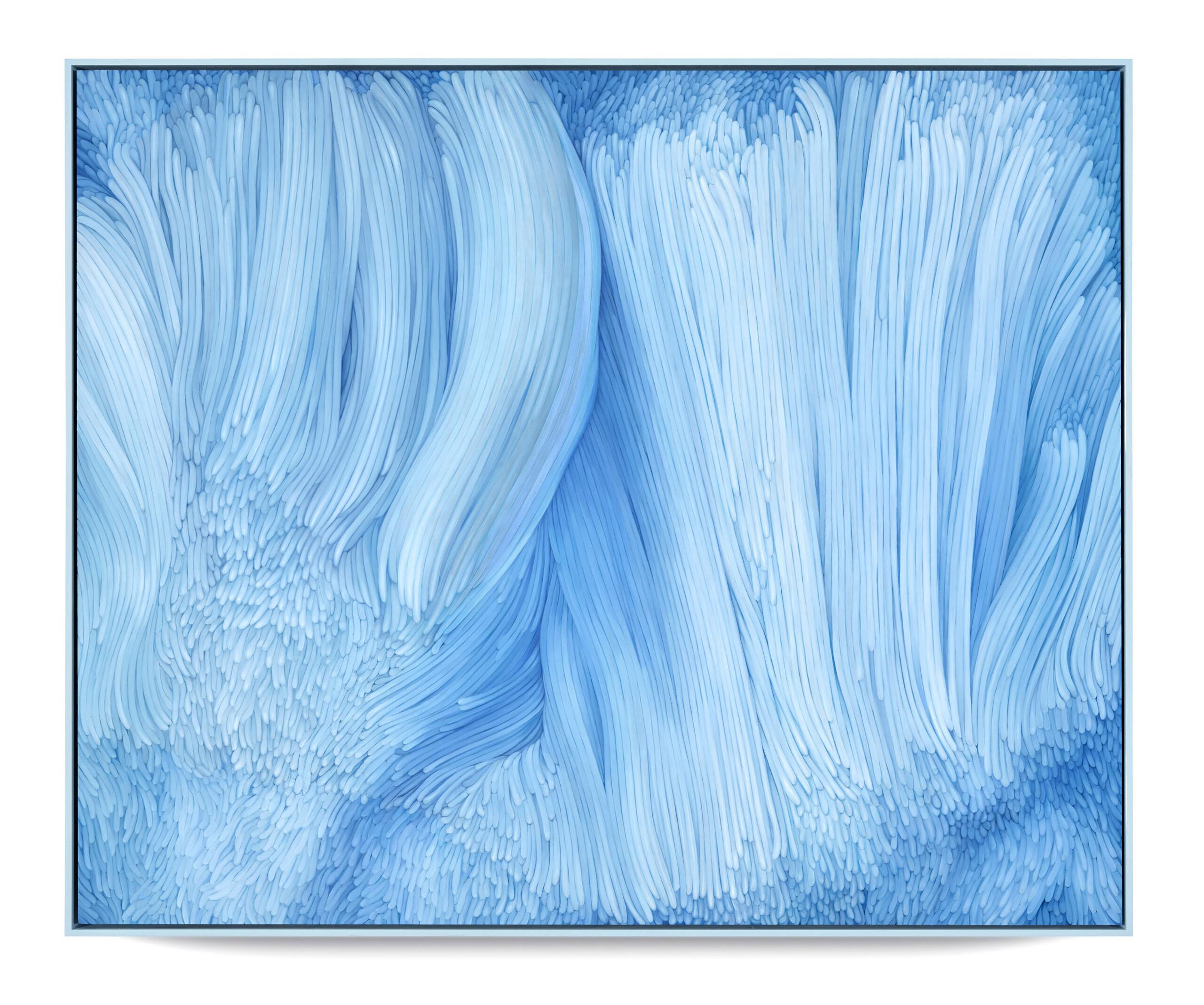
Bleu, 2025, 90 x 110 cm, oil on acrylic panel. Photo: Jean-Baptiste Béranger.
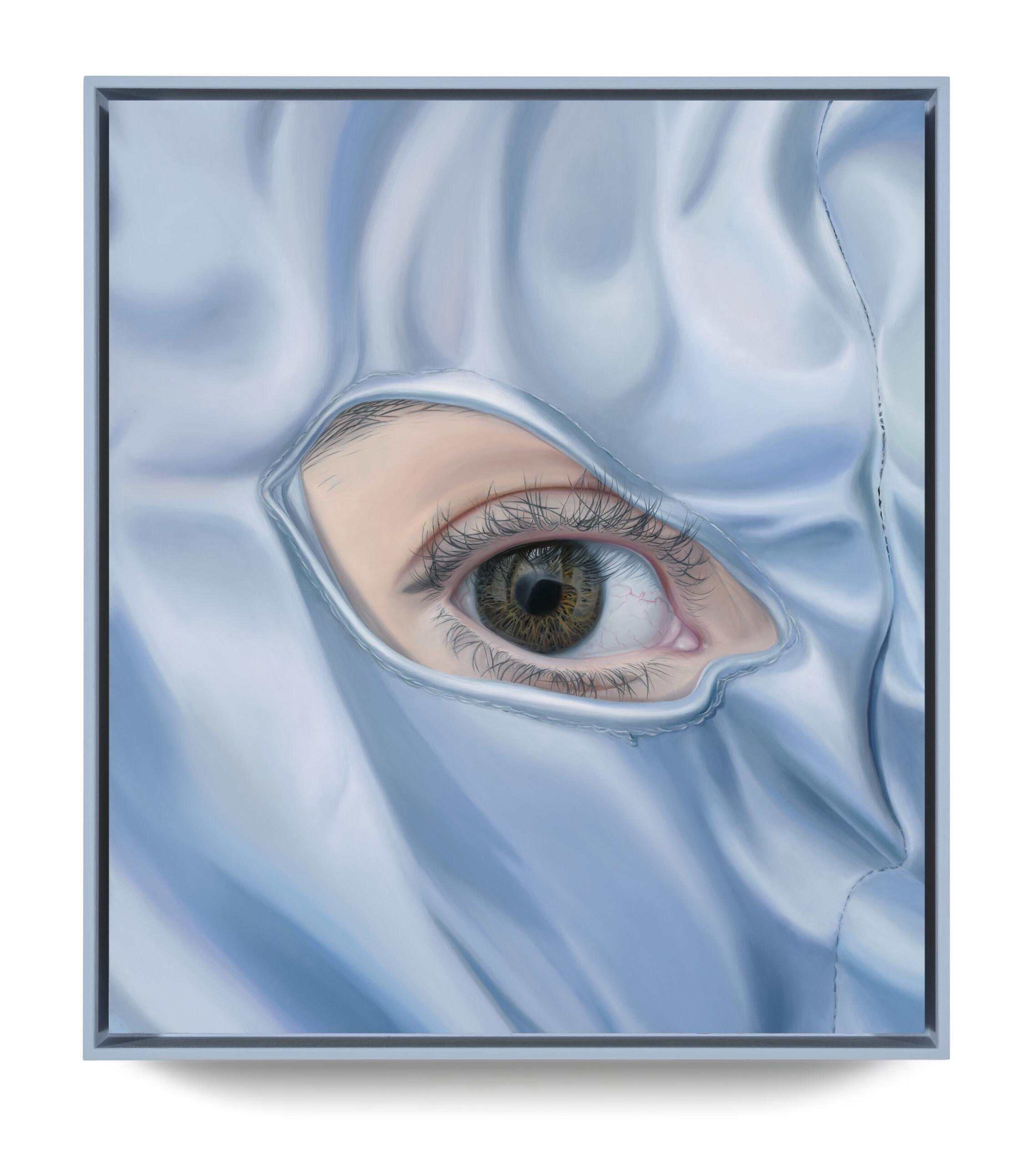
The Witness, 2025. 32 x 28 cm, oil on acrylic panel. Photo: Jean-Baptiste Béranger.
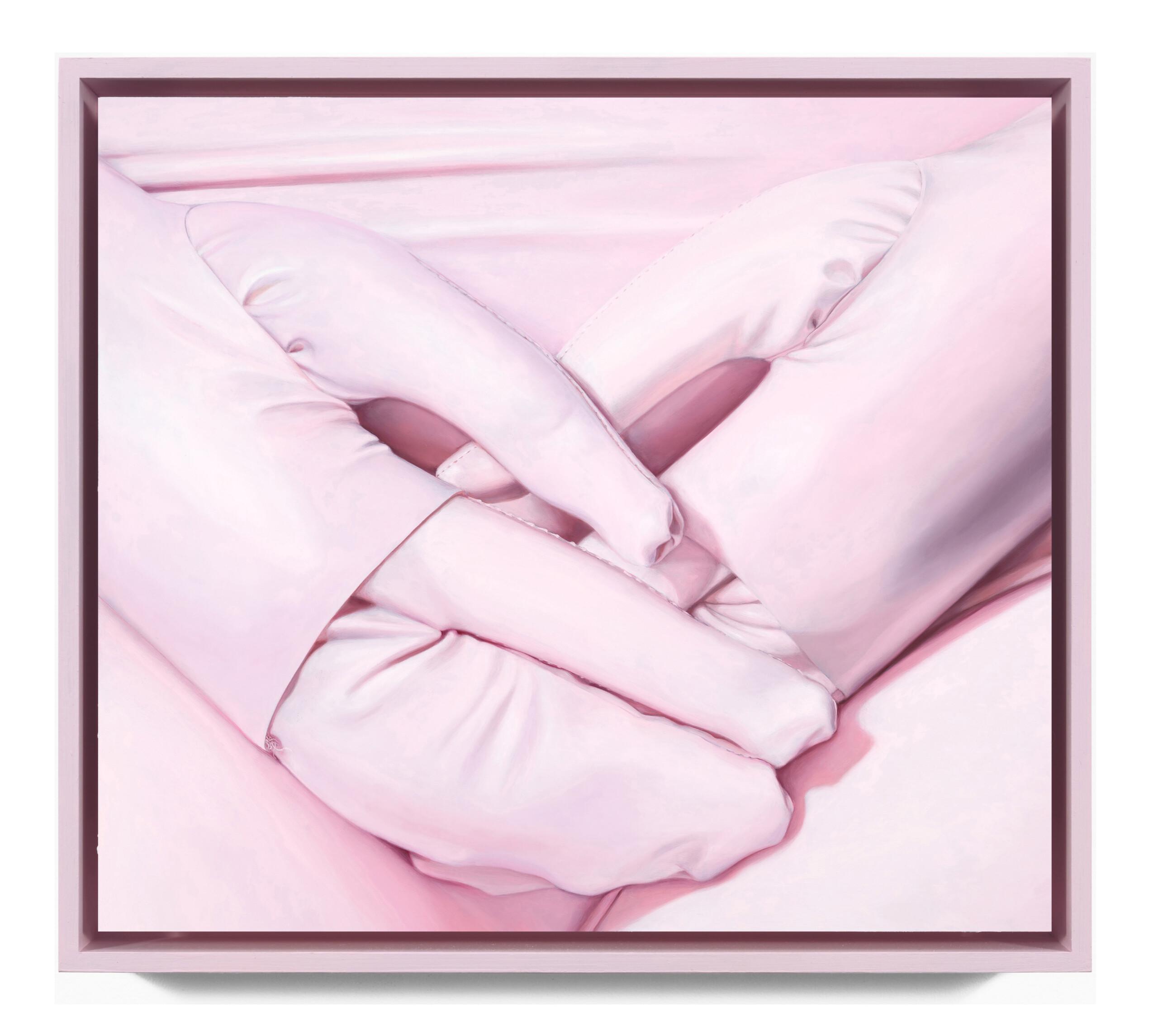
Untitled (The Naked Dive), 2022. 31 x 36 cm, oil on acrylic panel. Photo: Jean-Baptiste Béranger.
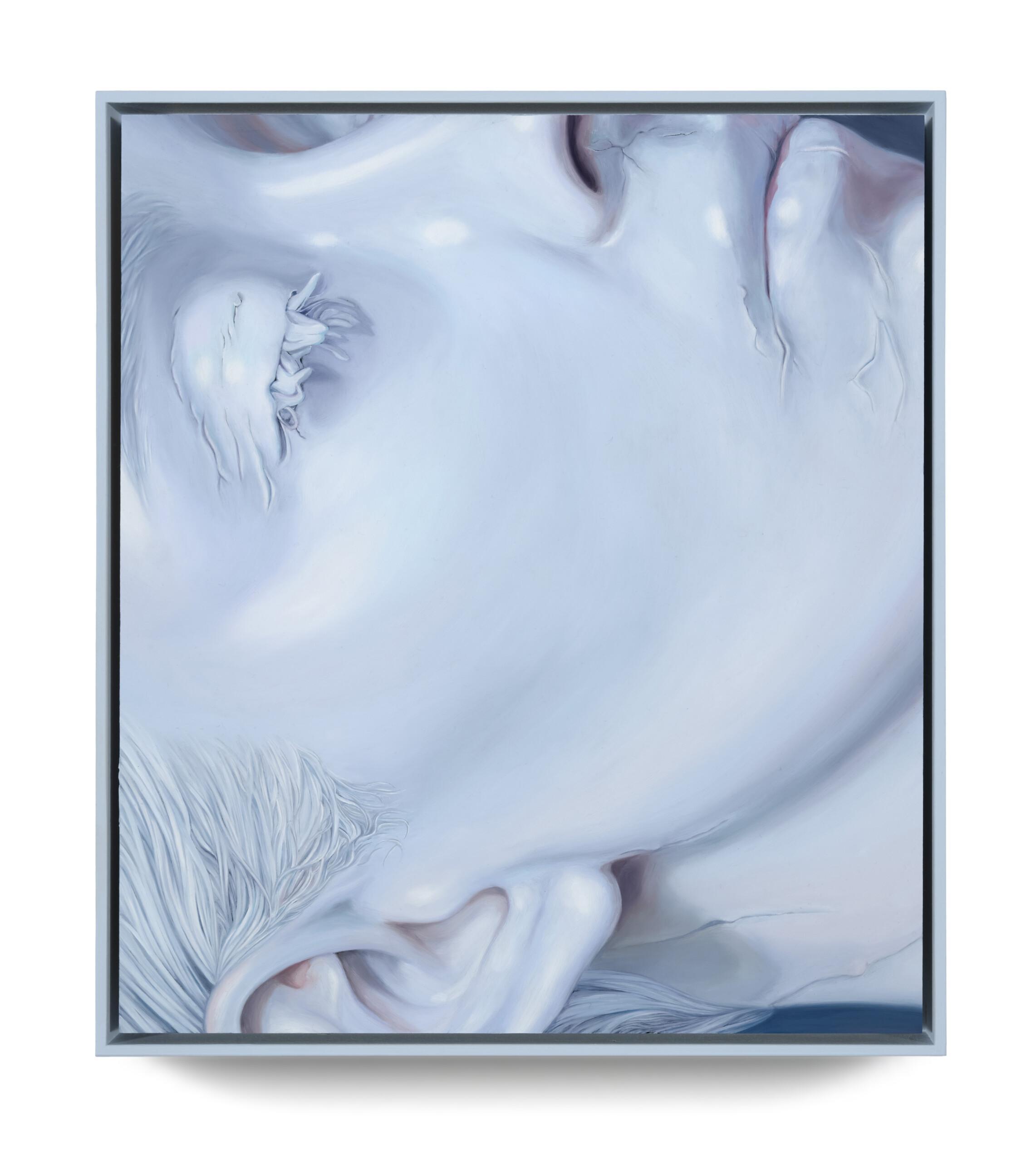
Nyx, 2025, 32 x 28 cm, oil on acrylic panel. Photo: Jean-Baptiste Béranger.
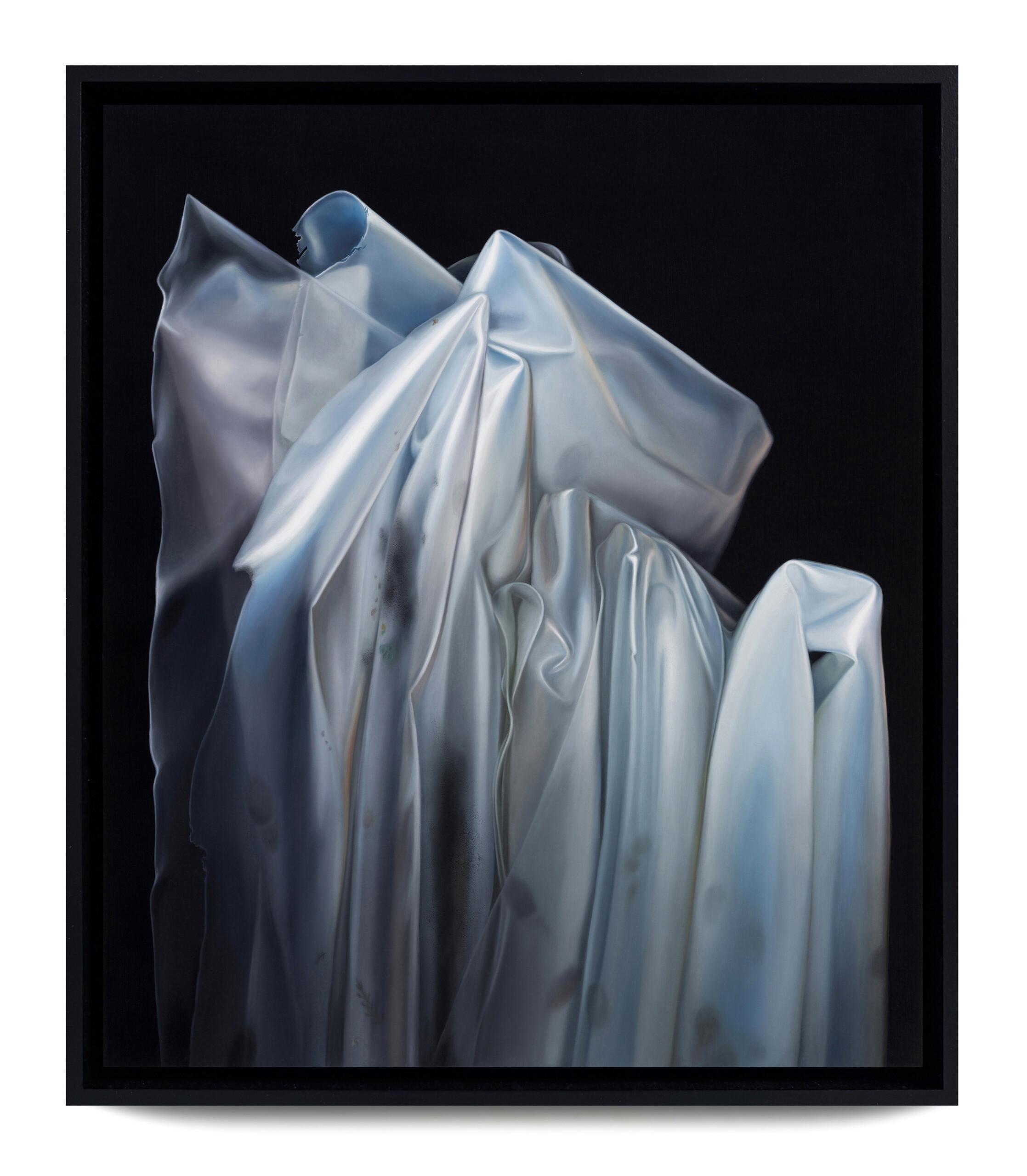
Untitled, 2017. 42 x 35 cm, oil on acrylic panel. Photo: Jean-Baptiste Béranger.
Presentation
Anna Camner’s painting moves in the borderline between surrealism and natural scientific observation, where reality and dreams constantly merge. With a technically precise and slow process, often on small panels or acrylic glass, she creates images that require presence and close observation. Her motives appear as microscopic cross-sections of a larger, unknown whole: organic structures, membranes, porous tissues, plant cell-like forms, eyes, gloves and bodily fragments that seem to be both living and artificial. Her visual language is characterised by a strong ambivalence between attraction and resistance, where materials may appear as skin, plastic, gelatine or decaying matter. It’s a world where the boundaries between the natural and the synthetic are constantly dissolving, often through recurring motifs of membrane – thin, permeable layers that both separate and bind. These function as central metaphors in her art: everything is in transition, everything is permeable.
The colour palette is dominated by powdery shades of pink, iceblue and white, enhancing a sense of coldness, dreamyness and artificial beauty, while earthly colors seldom take hold. The result is a visual universe that feels both clinical and sensual, where beauty often carries an undercurrent of discomfort.
Thematically, Camner moves between microscopic and cosmic perspectives, where small details can open up to infinite spaces. Her images recall both scientific preparations and hallucinatory landscapes, and the viewer encounters a quiet, enigmatic presence rather than a clear narrative. Central to her practice is not the motive itself, but rather how it emerges as an illusion: a compelling visual world, where the improbable is made believable through meticulous craftmanship. Her painting thus becomes an exploration of the limits of perception – a quiet, slow and intense meditation on what it means to see.
Anna Camner (b. 1977, Sweden) is based in Stockholm and graduated from The Royal Institute of Art in Stockholm (2003). She has exhibited internationally in, among others, Stockholm, London, New York, Cartagena, Mumbai and Japan and she was awarded the Beckers Art Award in 2017. Her artworks are included in collections such as Magasin III Museum & Foundation for Contemporary Art, Malmö Art Museum, Wanås Konst, Public Art Agency Sweden and UBS Art Collection.
”Painting lets me observe and invent. I work as if depicting a species from elsewhere, not yet named, where bodies, plants and materials form one another, becoming stranger the closer I look.”
– Anna Camner